22 September 2026 at 11:00AM
My PMP Journey
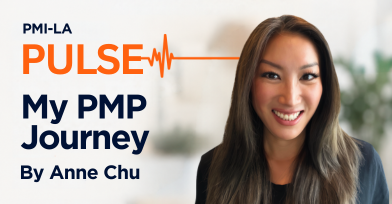
My PMP Journey
My PMP journey was not a linear one to say the least. In fact, it has taken many shapes throughout the years.
I’ve been a project manager for nearly 15 years, working across media, technology, real estate, and most recently, live events. While “Project Manager” hasn’t always been in my title, I’ve consistently used the skills of one. At the end of the day, project management is what I identify with most professionally.
I thrive in roles where I’m collaborating with teams, building systems, creating processes, and bringing something from strategy through execution. I love leading projects and programs, but I also love what happens after the delivery: looking at what worked, what didn’t, and what we can improve the next time around. Feedback loops, lessons learned, continuous improvement, and the opportunity to do it again, only better and more efficiently. That mindset has followed me throughout my career.
Why PMP? Why Now?
I considered getting my PMP many years ago, but I always came back to the same question: What is the value of getting my PMP if I’m already doing the work?
I was already leading projects and managing teams, stakeholders, timelines, risks, budgets, and deliverables. Did I really need a certification to prove that I knew how to do something I had been doing for years?
For a long time, my answer was no.
Then this year, something changed.
I was going through another pivot in my life and career and thinking more intentionally about where I wanted to go next. In today’s competitive job market, I started asking myself different questions: How do I clearly communicate the experience I already have? How do I remain competitive and relevant while continuing to provide value to the clients, teams, and organizations I work with?
And how do I communicate all of that quickly and succinctly?
Sometimes, three little letters after your name can say quite a bit. (More on that later)
At the same time, I had become more involved with PMI Los Angeles, and somewhere along the way, I realized: I found my people.
From the very first in-person PMI-LA event I attended, I felt welcomed. I initially went because I was curious. I wanted to see what PMI-LA was about, what it had to offer, and whether it was a community I wanted to become part of.
Almost immediately, I met several members of the chapter’s leadership team. When I mentioned that I was interested in volunteering and shared the types of things I wanted to contribute, they didn’t just tell me how to sign up. They encouraged me to get involved.
So I did.
From day one, I was given the opportunity to jump in, contribute, and bring my own experience and ideas to the table. Sure, we may have all come from different industries, backgrounds, experience levels, and even perspectives, but we spoke the same language. We shared a common goal of learning from one another and creating something meaningful together.
I originally sought out PMI-LA because I wanted to connect with other project management professionals. What I found was a community where I could contribute, take on new challenges, and continue growing as a leader.
And somewhere in that process, pursuing my PMP started to make a lot more sense.
Taking the PMI-LA PMP Prep Course
Originally, I planned to pursue my PMP later in the year, probably sometime in Q4 when things were a little calmer. Then I learned the exam was changing.
I started hearing all the warnings: Take it before the new exam! The new one is going to be harder!
So, I decided to speed up my timeline.
I enrolled in PMI-LA’s in-person PMP Prep Course to complete my required 35 hours of project management education. The course took up five Saturdays of my life, but it gave me a solid foundation and, more importantly, instructors who genuinely cared about their students and continuously looked for ways to make the material more valuable.
My plan was simple: finish the course, study, and take the existing exam before it changed.
That did not happen.
Work immediately became busy, studying got pushed aside, and by the time I seriously started preparing, I was about two weeks away from the exam change. I quickly realized:
I was not ready.
Luckily, I hadn’t scheduled the exam yet. I tried to see if I could make the cutoff, but eventually had to admit that rushing just to take the older version wasn’t going to help me. The deadline came and went.
At that point, I had another decision to make. I could push the PMP off again, or I could adjust the plan.
And if there’s one thing project managers know how to do, it’s adjust the plan.
Studying for a Brand-New Exam
Once the new exam launched, I was suddenly entering unknown territory. There weren’t months or years of study guides, videos, and lessons learned from other test takers to rely on. I had to figure out what had changed and which resources actually reflected the new exam.
I watched crash courses covering the updated material to fill in the gaps from the previous version, tested different study resources, and worked through practice questions until I figured out what worked best for me.
More importantly, I realized this wasn’t an exam I could simply memorize my way through. The questions were largely scenario-based. I needed to know the PMI concepts and processes, but more importantly, understand when and why to apply them.
Eventually, my studying came down to three things: understanding the PMI mindset, learning how to read the questions and identify what they were actually asking, and practicing time management. PMI Study Hall became my primary resource for practice questions and full-length exams, while PMI Infinity helped me quickly clarify concepts along the way.
Exam Day
I gave myself a deadline: I was taking the exam by the end of the month.
I scheduled it, completed three full practice exams, and took my final practice test two days before the real thing.
Did I feel completely ready?
Absolutely not.
But at some point, I decided I was going to take it anyway. If I failed, I failed. I could learn from it and try again.
When I walked into the testing center, I was extremely nervous. My brain felt like mush from cramming during the final few days, something I absolutely do not recommend and somehow continue to do to myself anyway.
The testing setup was different from what I had practiced with, and the case studies looked unfamiliar. I immediately started questioning whether I had prepared enough.
But eventually, I settled in and got into the rhythm of the questions. I took both of my 10-minute breaks, regrouped, and kept going.
By the final section, I was in the zone and even had a little time left to review a few answers.
When I finished, I walked out of the testing room and was simply told to pick up a piece of paper at the front desk before leaving.
I gave them my name. They handed me the paper.
I looked down.
I passed.
Not only had I passed, I had scored Above Target across all three domains: People, Process, and Business Acumen.
I let out a huge sigh of relief and practically ran out of the testing center.
What I Learned Along the Way
Interestingly, after studying for both versions, I found the newer PMP exam more intuitive. I wouldn’t call it “easy” by any means, but the scenarios felt more grounded in situations I could imagine encountering in the real world.
Maybe part of that was the new exam itself. Maybe part of it was that I had finally learned how to read PMP questions. Or maybe I finally understood the PMI mindset. Most likely, it was a combination of it all.
But during the exam, I had another realization:
The PMP exam wasn’t really asking me to memorize how to manage projects. It was reinforcing a mindset for how to lead them.
Understand the situation before reacting. Communicate. Collaborate. Engage the right people. Look for the root cause. Empower the team. Assess the impact before making a change. Manage risk proactively. Keep the customer and business value in mind. Learn, adapt, and continuously improve.
And then it hit me: those weren’t just strategies for passing an exam.
They were principles I had been developing throughout my career.
More Than Three Letters
Looking back, earning my PMP means something different to me now than it would have years ago.
At one point, I thought getting certified was about proving that I knew how to be a project manager.
I don’t see it that way anymore.
For me, earning my PMP became about recognizing the experience I had already built while challenging myself to continue growing. It gave me a common framework and language for things I had learned through years of doing the work, sometimes successfully and sometimes through lessons learned the hard way.
And my journey with PMI-LA has been an equally important part of that experience.
I joined because I was looking for a professional community during a period of transition. Instead, I found opportunities to lead, contribute, exchange ideas, and build alongside people who care deeply about what they do.
The PMP may have added three letters after my name, but the journey reminded me of something much bigger: being a project manager isn’t about having all the answers. It’s about continuing to learn, adapting when the plan changes, bringing people together, and finding a better way forward.
My path to the PMP certainly wasn’t linear.
But then again, very few worthwhile projects are.